Cotopia - Build your Virtual Workspace
Problem
The traditional office setting has its limitations, such as location, time constraints, and dependency on taxes and laws. On the other hand, working remotely can be challenging due to the lack of human connection and the potential for communication problems.
Objectives
develop an online platform that would decentralize organizations and make remote work more effective by:
- Improving communication and collaboration among team members
- Fostering a sense of community and belonging
- Providing tools for task management and project execution
Target Users:
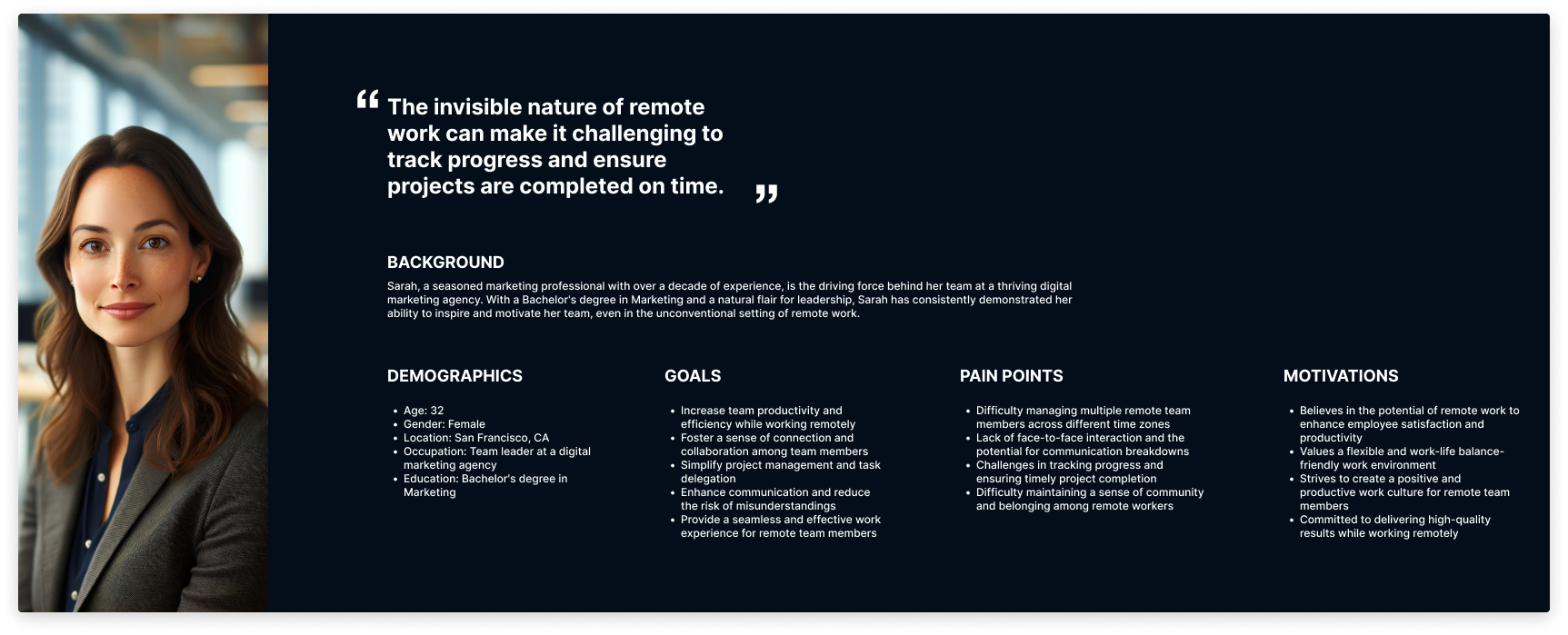
Individuals or groups of at least three people who are motivated to work together to achieve a common goal and are open to a remote work arrangement.
Design Decisions
- Focus on native applications: Instead of a web-app, develop native applications for iOS and Android to provide a more seamless and responsive user experience.
- Integrate AI: Utilize AI-powered tools for communication and profiling to enhance collaboration and improve the overall user experience.
- Target small organizations: Prioritize onboarding and supporting small groups of people who are more likely to embrace remote work and adapt to new tools and processes.
Design Process
Research
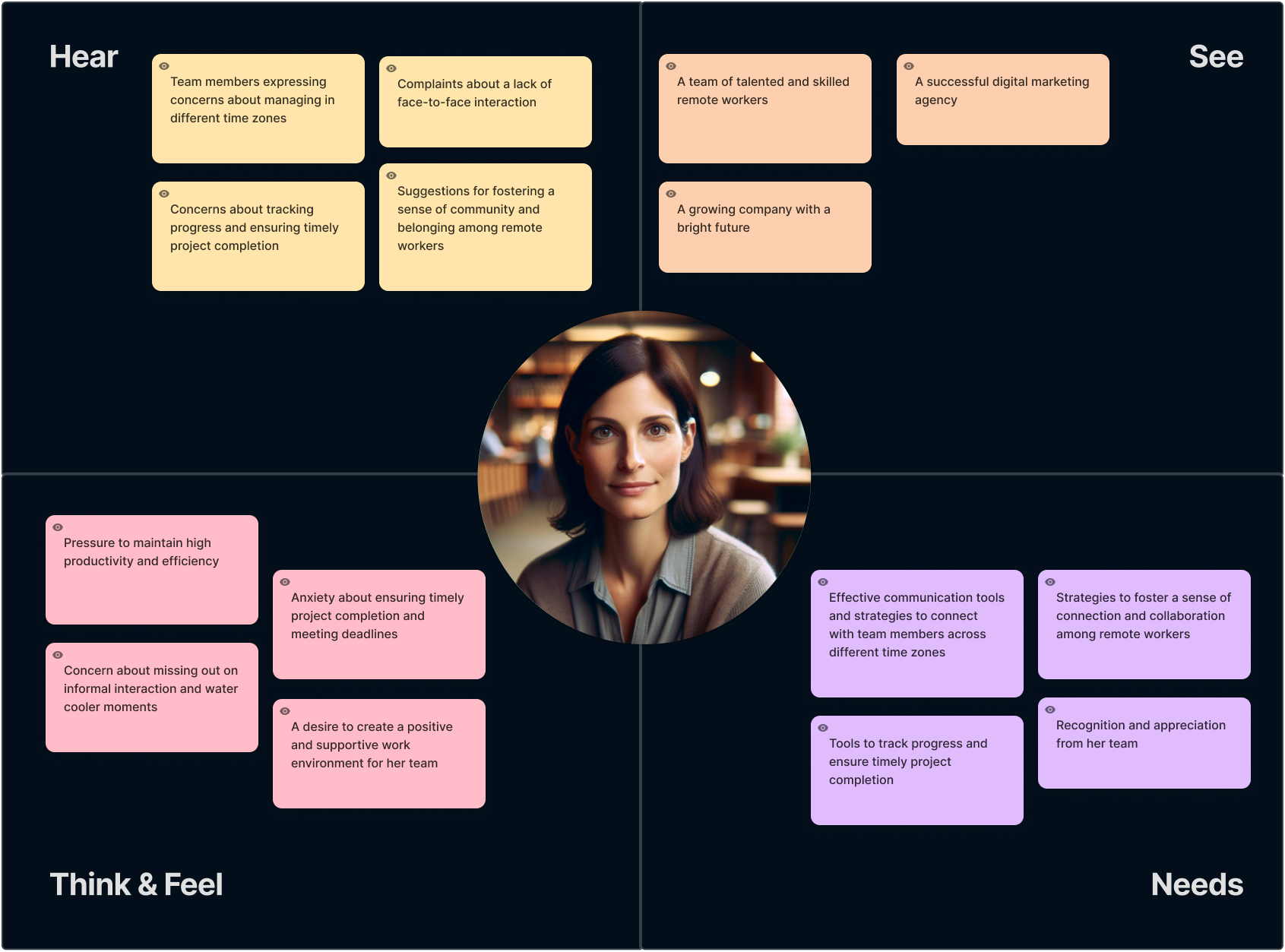
User Interviews: Conducted in-depth interviews with remote workers from various industries to understand their experiences, challenges, and expectations for a decentralized work platform.
Surveys: Distributed online surveys to a wider range of remote workers to gather quantitative data on their preferences, needs, and pain points.
Focus Groups: Organized focus groups with remote workers to facilitate open discussions about their experiences and gather insights into their collaborative practices and communication preferences.
Ideation
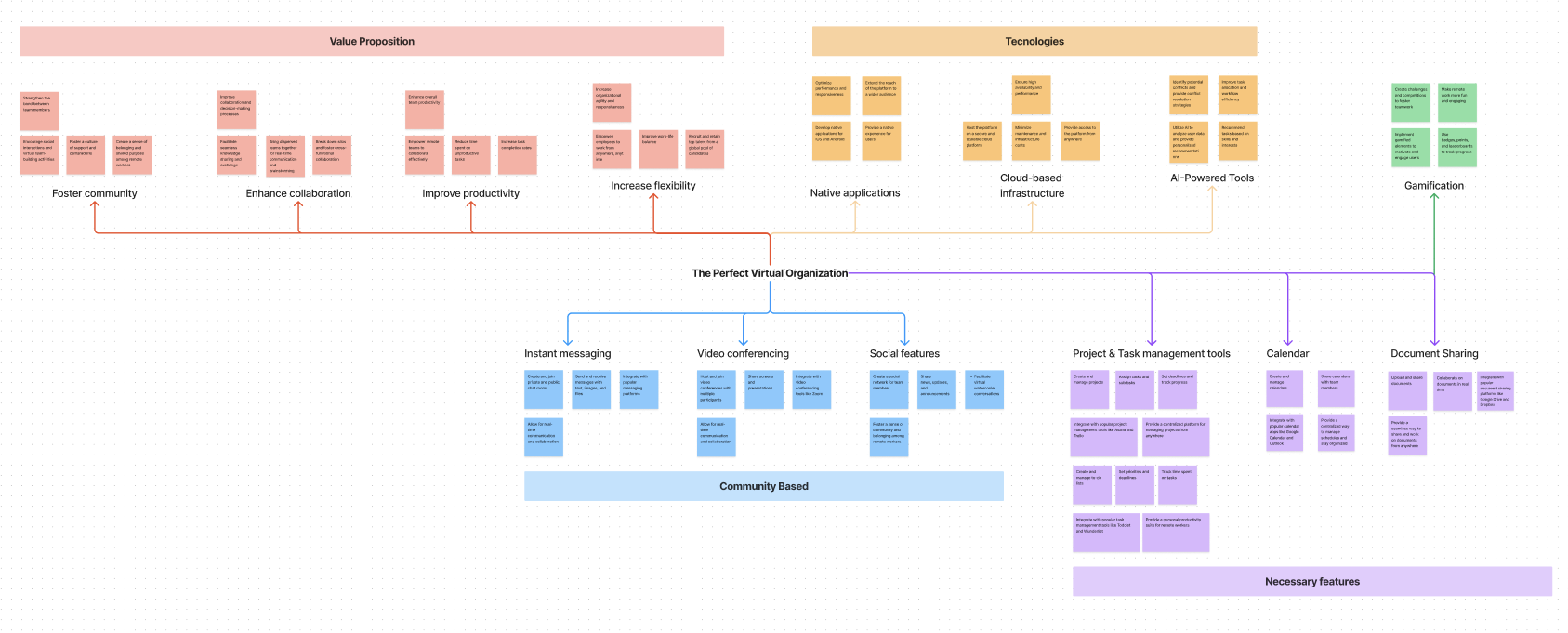
Brainstorming Sessions: Engaged in collaborative brainstorming sessions with the design team to generate ideas for features and functionalities that would address the identified needs of remote workers.
Exploration of Existing Solutions: Reviewed existing remote work platforms to identify strengths, weaknesses, and potential gaps in the market.
Concept Sketching: Created concept sketches to visualize the overall layout, user flow, and key features of the platform.
Prototyping
Low-fidelity Wireframing: Developed low-fidelity wireframes to establish the basic structure and layout of the platform, ensuring clear navigation and intuitive user interactions.
High-fidelity Prototyping: Created high-fidelity prototypes using design tools to showcase the platform's visual design, interactive elements, and responsiveness across different devices.
Usability Testing: Conducted usability testing sessions with a representative sample of remote workers to gather feedback on the prototype's usability, identifying areas for improvement and refining the design accordingly.
Testing
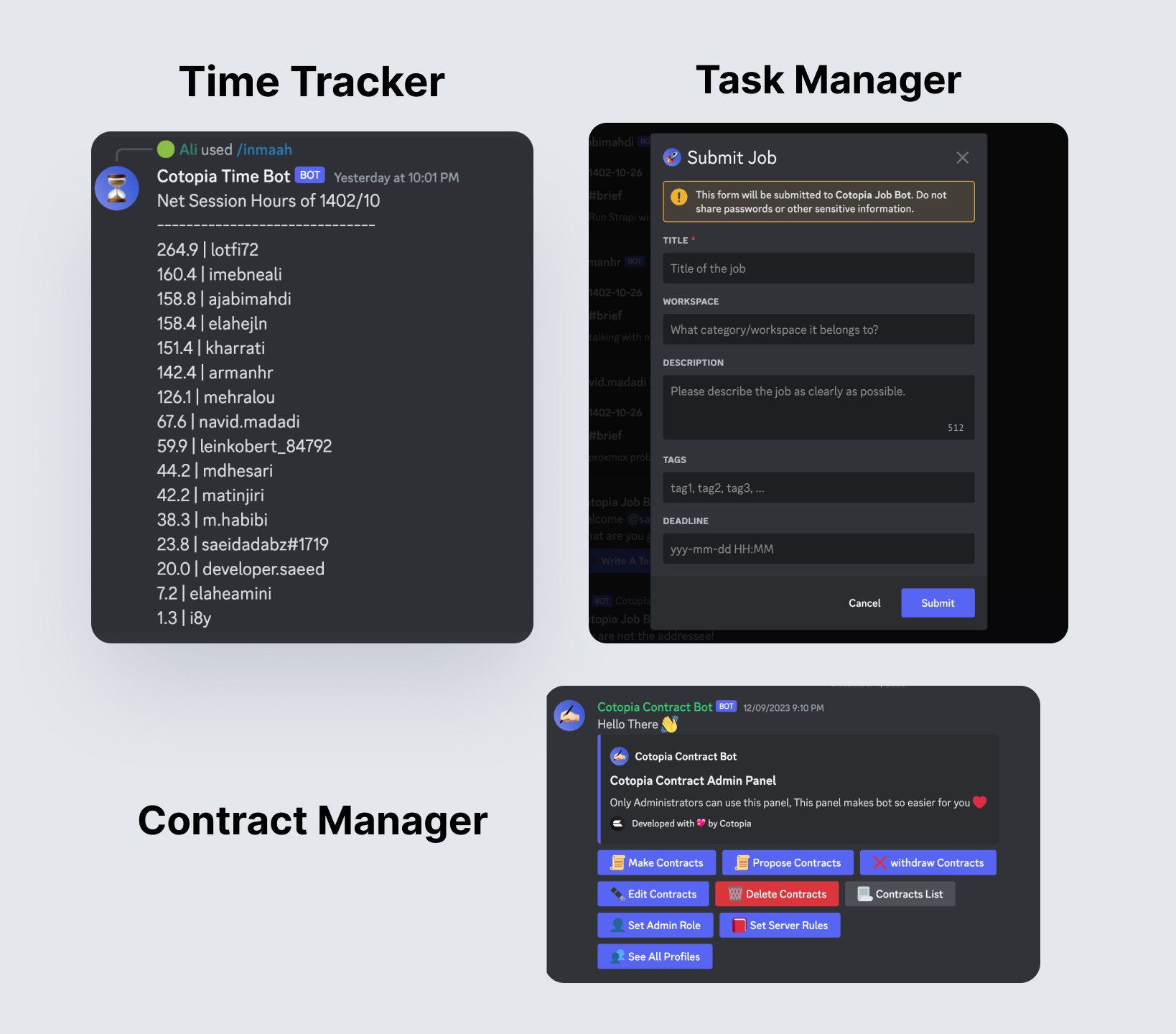
MVP Design Inside discord: Designed and developed prototypes with discord bots to test inside teams and validate the ideas.
User Interviews: Conducted follow-up interviews with participants from the usability testing sessions to gain deeper insights into their experiences and refine the design based on their feedback.
Monitoring activity inside workspaces: Created tools to get reports from workspaces and understand the problems and efficiency of tools.
Developing MVPs:
As the prove of concept was our main goal, we described the importance to investors and we decided to split the Main idea into mini products so we would be able to test more accurate Solutions and concepts. we started with 5 smaller products like Task Manager, time tracking, financial management with crypto, Contract management, and Communication tools. After building and delivering those bots to workspaces, we started to track the activity on those teams so we would be able to find if the solution fits the audience well.
Finalizing the product design:
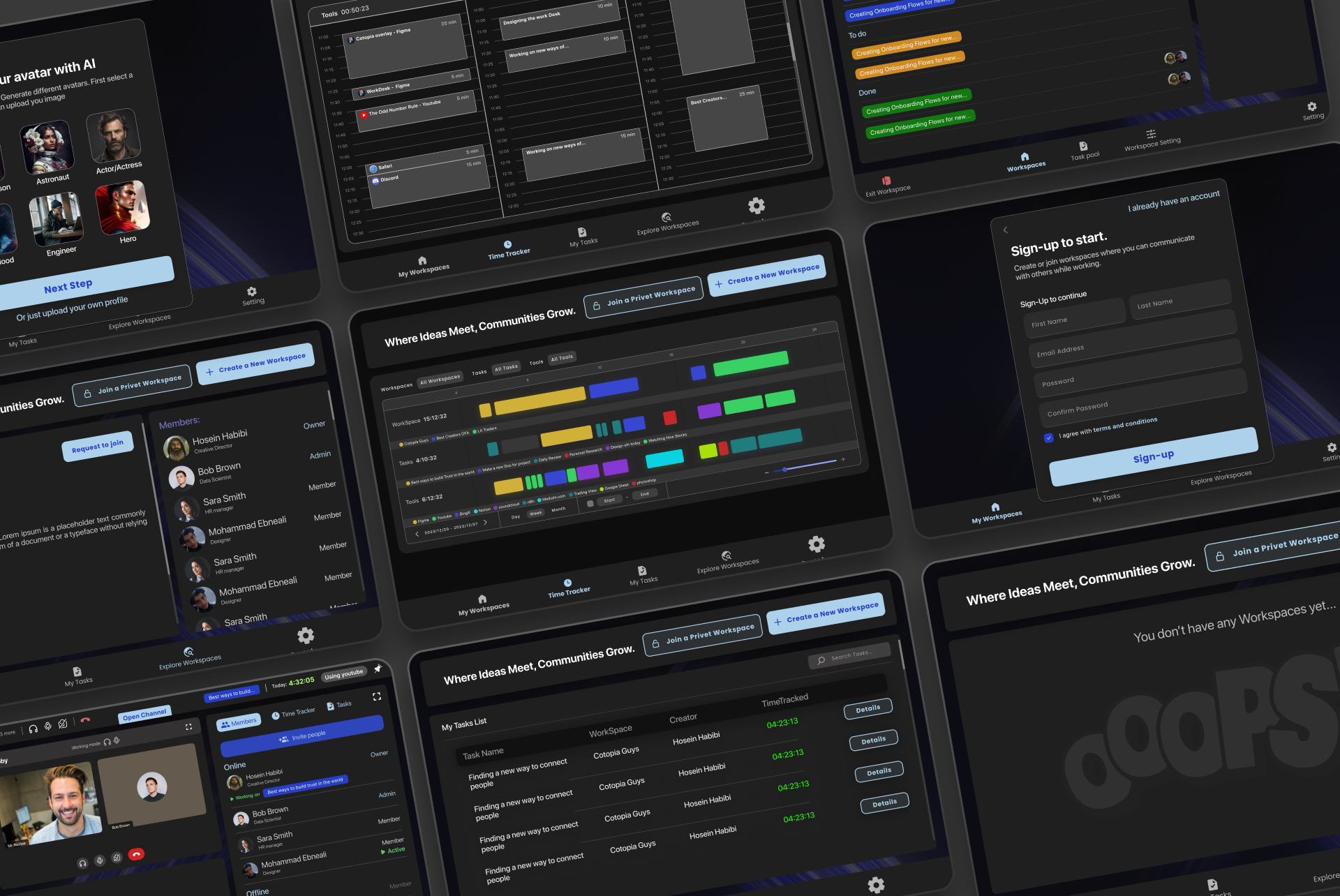
The design phase is where the ideas generated in the ideation phase are transformed into tangible representations of the product. This involves creating wireframes, prototypes, and mockups that showcase the platform's user interface, user experience, and overall design aesthetics.
Key Considerations in the Design Phase:
- User-Centered Design: Prioritize the needs and preferences of the target users throughout the design process. Conduct user research to understand their pain points, preferences, and expectations.
- Simplicity and Usability: Ensure the platform is easy to navigate, understand, and use. Avoid clutter, unnecessary complexity, and confusing interactions.
- Consistency: Maintain visual and interaction consistency across the platform to create a cohesive and intuitive experience.
We started the final design section by creating design system and clarifying the goals and features of final product. then we started to turn the wire-frames into interactive designs.
Impact
- Assisted several organizations in transitioning to a fully remote work model.
- Reported an increase in team member productivity among users of the MVP.
- Improved communication and collaboration among team members.
- Fostered a sense of community and belonging among remote workers.
Learnings
- The importance of a seamless user experience in a remote work environment.
- The need for integration of technology, such as AI, to enhance remote work collaboration.
- The effectiveness of targeting small organizations in the early stages of product development.